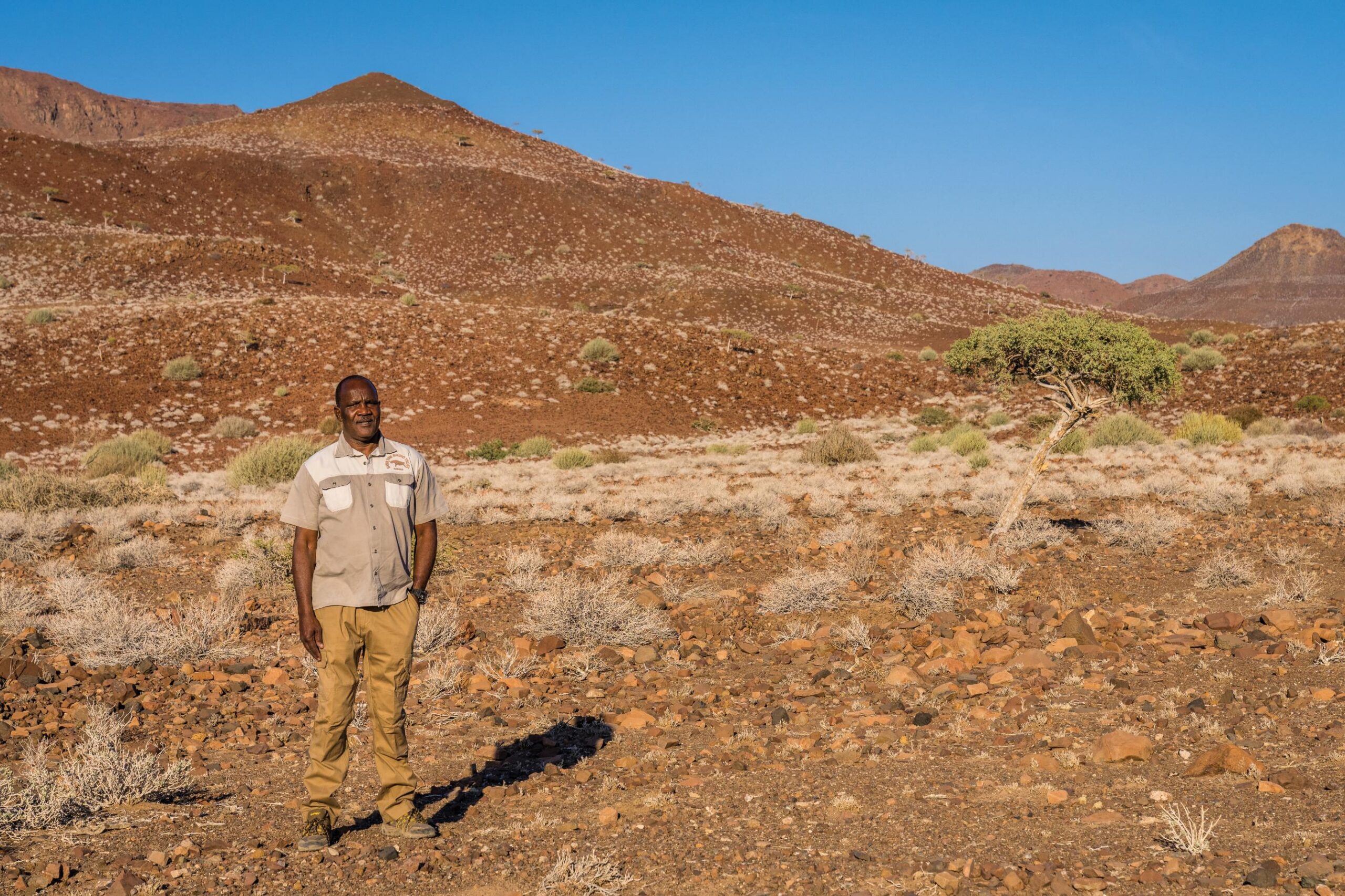
Simson Uri-Khob’s early life was shaped by the practical world of craftsmanship. A welder and mechanic by trade, he always preferred working with his hands – a skill that unexpectedly paved his path into the heart of Namibian conservation.
It began with a broken-down field vehicle on a Sunday. After fixing a car for the late Blythe Loutit, founder of Save the Rhino Trust (SRT), Simson was invited to join the team as a supervisor and mechanic. While his initial role involved building elephant dams and maintaining machinery, a few days spent in the field with the rhino tracking teams changed his trajectory forever.
At the time, SRT Namibia was already pioneering a conservation model that was quietly redefining how wildlife protection could work in remote landscapes. Founded in the 1980s, when black rhino numbers had declined dramatically across Namibia, the organisation focused on protecting the last populations of desertadapted black rhinos roaming freely across the vast, unfenced landscapes of Kunene and parts of Erongo. Their approach was simple in concept but demanding in execution – boots on the ground, eyes on the land and deep partnerships with local communities.
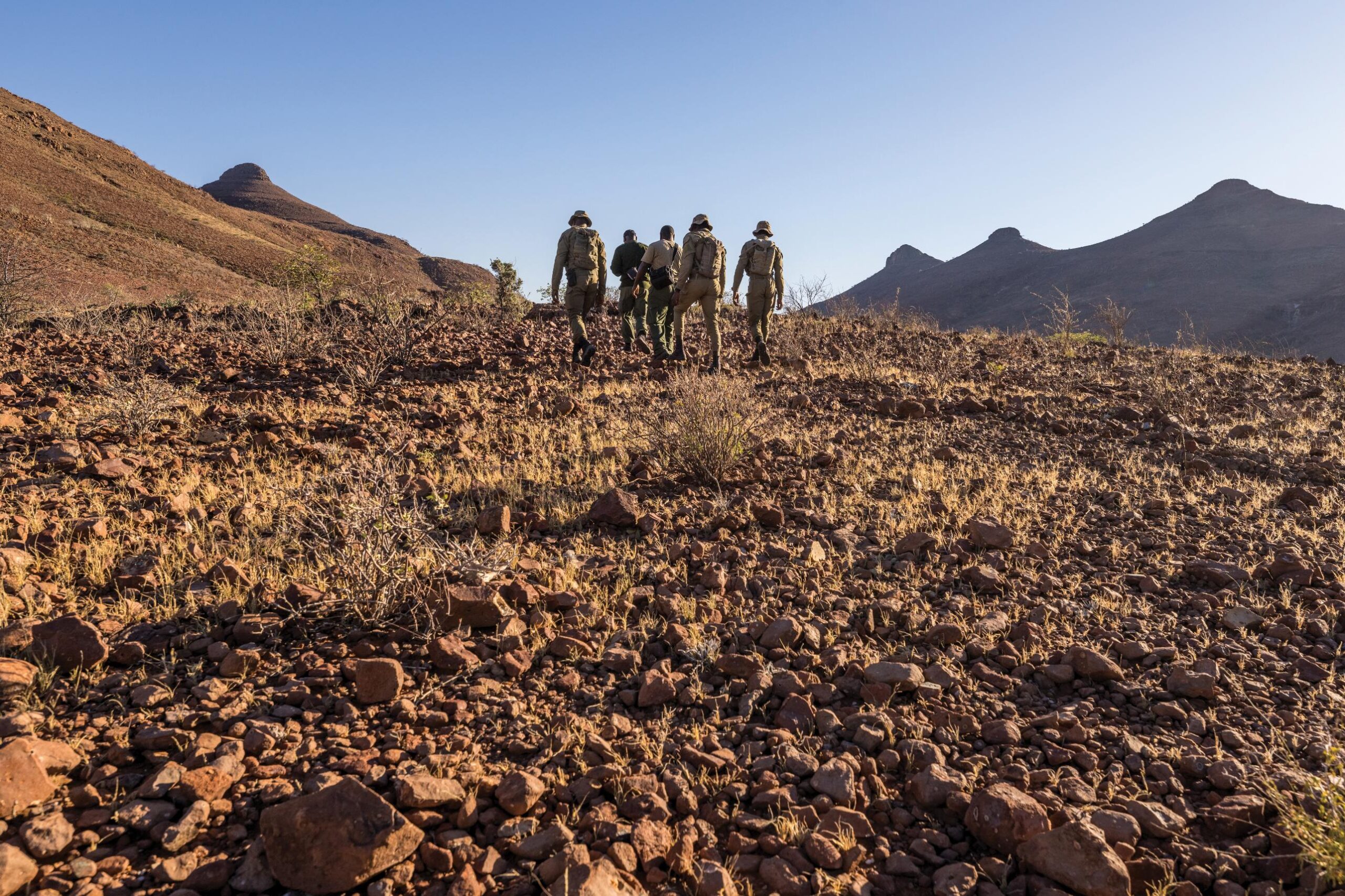
Simson chose to start from the ground up, learning the art of land tracking from veteran rangers. Rhino tracking is not simply walking through the bush. It is an intricate skill built on patience, observation and respect for the environment. Rangers read the landscape like a living map, interpreting footprints pressed into gravel, broken twigs and subtle shifts in terrain. In these dry regions, where water is scarce and distances vast, tracking teams can walk for hours or even days to locate individual animals.
That work forms the backbone of SRT’s daily operations. Rangers patrol enormous conservancy areas on foot, often covering tens of kilometres in a single day. They monitor rhino movements, identify individuals and collect vital data that informs long-term conservation planning. Each rhino is known, recorded and monitored – not in captivity or fenced reserves, but in wild terrain that demands constant vigilance.
Over a 32-year journey, Simson climbed the ranks from tracker to the director of field operations, eventually earning his master’s degree and becoming the CEO of SRT. His rise mirrors the philosophy of the organisation – invest in people, build knowledge over time and trust that local leadership holds the strongest key to conservation success.
His passion is fuelled by the unique nature of Namibia’s desert-adapted black rhinos (Diceros bicornis bicornis). These are the only free-roaming black rhinos in the world, living without fences in the harsh, open landscapes of the Kunene and Erongo regions. For Simson, their survival in such demanding conditions makes them a symbol of resilience.
But their survival does not happen by chance.
Save the Rhino Trust operates across communal conservancies where wildlife and people share the same space. In these areas, conservation is not an abstract concept – it is tied directly to livelihoods. The trust works closely with conservancies to train and employ rhino rangers drawn from local communities. These rangers are not outsiders; they are sons, daughters, fathers and neighbours who understand the rhythms of the land because they have grown up within it.
Through this model, conservation becomes something owned rather than imposed. Rangers monitor wildlife, report suspicious activity and engage with communities to ensure rhinos remain protected. The organisation also supports conservation education, helps to strengthen tourism partnerships and contributes to building local capacity – reinforcing the idea that healthy wildlife populations bring tangible benefits to communities.
Beyond the protection of animals, Simson is a bridge-builder. He has dedicated his career to bringing communities and wildlife together. Under his leadership, SRT has refined a model where local communities are not just neighbours to wildlife, but their primary protectors. By employing community members as rhino rangers, he has transformed the way rhinos are perceived – not as distant creatures, but as a valuable asset that brings tourism opportunities, employment and long-term sustainability to the region.
Technology has also become part of the trust’s evolving toolkit. Alongside traditional tracking methods, teams now use digital reporting systems, GPS tracking and conservation data platforms to strengthen their monitoring efforts. Yet, even with modern tools, the essence of the work remains deeply human – walking the land, understanding the animals and responding quickly to threats.
The weight of this responsibility is felt most deeply in the difficult moments. Simson still carries the memory of a 2014 poaching incident, where the loss of an animal he knew personally served as a stark reminder of why his work must never stop.
Anti-poaching remains one of the most challenging aspects of conservation. Rangers operate in remote terrains under physically demanding conditions, often facing real risks as they protect wildlife from illegal hunting. Their commitment requires endurance, courage and a sense of purpose that goes beyond employment; it becomes a calling.
“I don’t want to tell my kids one day that we had rhinos in Namibia and show them pictures,” Simson says. “I want to say, ‘I have been looking after that rhino… and there it is, still alive.’”
Today, Save the Rhino Trust Namibia stands as one of the country’s most respected conservation organisations, widely recognised for its role in protecting free-roaming black rhinos in one of the toughest environments on Earth. Its success is measured not only in rhino numbers, but in the strength of the communities that stand alongside these animals.
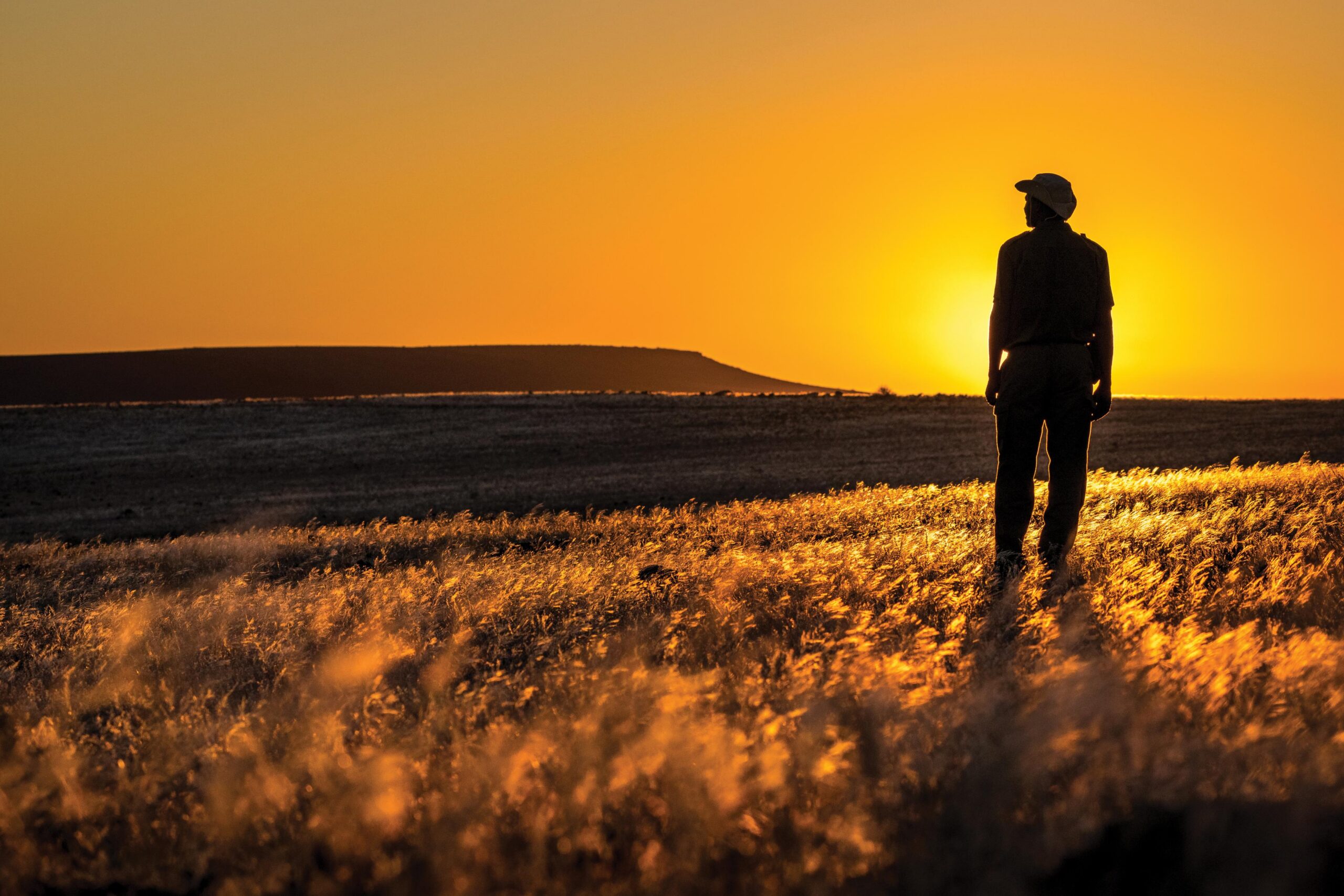
Simson Uri-Khob is more than a conservationist; he is a guardian of Namibia’s natural heritage. His journey from mechanic to conservation leader reflects the deeper truth at the heart of Save the Rhino Trust’s work – that conservation is not only about animals, but about people, perseverance and the quiet determination to keep walking, step by step, across the land.
And perhaps that is what makes Namibia’s rhinos so remarkable. Not only that they survive in the desert, but that there are people like Simson – and the teams he leads – who choose, every day, to walk beside them and ensure that Namibia’s wild future remains exactly that: wild. TN